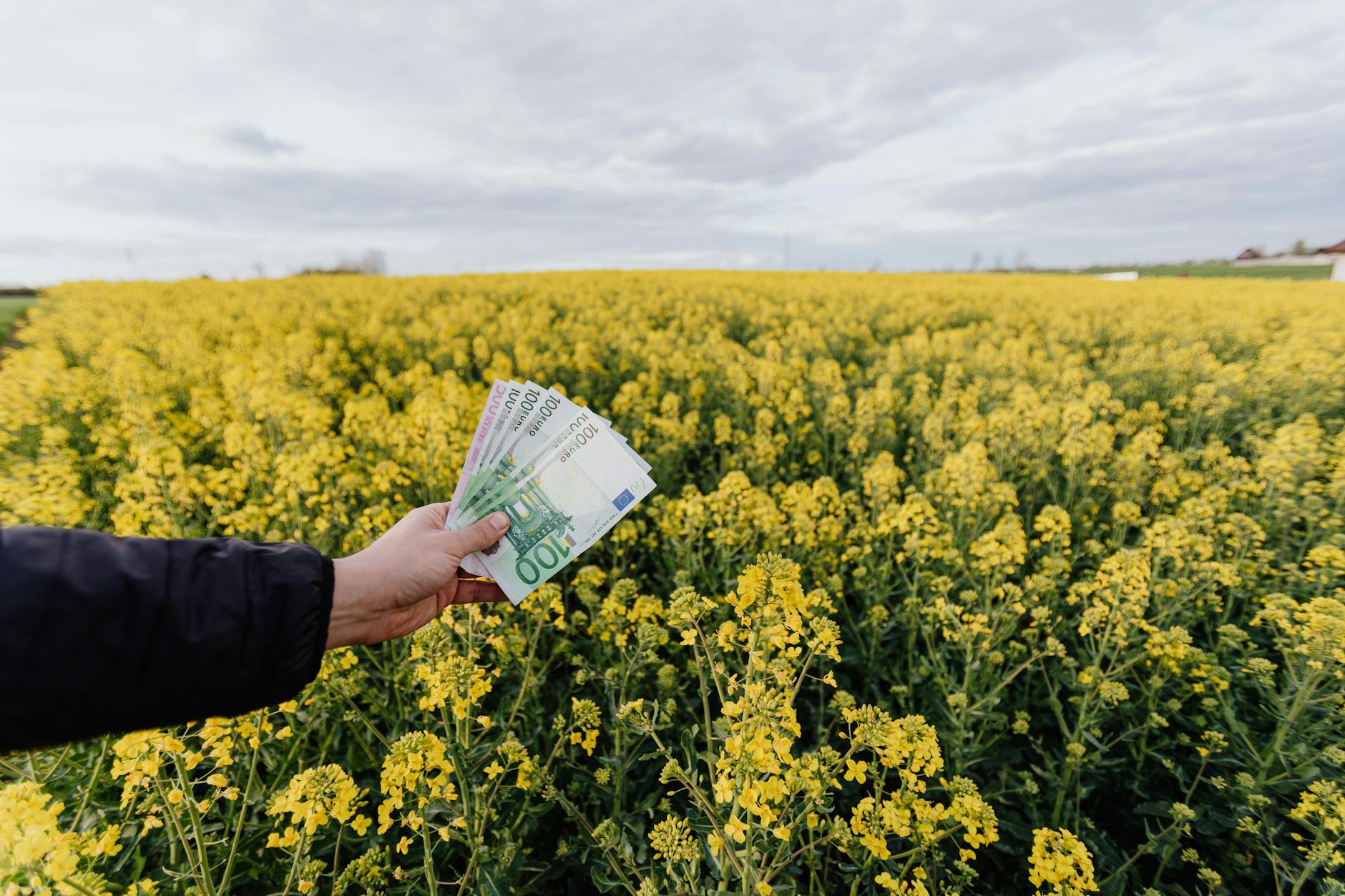
How to Invest in Farmland for Passive Income and Tax Benefits
When most high-income professionals think about alternative investments, farmland rarely makes the list. That’s a mistake that could cost you millions in missed opportunities.
This article is for educational purposes only and reflects the opinions of the authors. It is not financial, legal, or tax advice. Always consult qualified professionals before making investment or legal decisions.
While everyone’s chasing AI stocks and crypto, agricultural land has quietly delivered average annual returns of 10-12% over the past two decades, according to the National Council of Real Estate Investment Fiduciaries. More importantly, farmland offers something most investments can’t: genuine passive income paired with tax advantages that can significantly reduce your overall tax burden.
You can’t earn your way to wealth — ownership is the game. And farmland ownership represents one of the most stable forms of real asset ownership available to accredited investors today.
The Hidden Tax Advantages of Farmland Investment
Farmland investment offers tax benefits that most high-income professionals have never explored. Unlike traditional real estate, agricultural land qualifies for specialized tax provisions that can dramatically reduce your tax liability.
The most significant advantage comes through agricultural depletion allowances and conservation easements. When you invest in farmland through properly structured entities, you can often deduct soil depletion, similar to how oil and gas investors use depletion allowances. These deductions can offset other income, not just farming income.
Conservation easements provide another powerful tool. By placing restrictions on land development — essentially promising to keep it agricultural — investors can claim charitable deductions worth 30-50% of the land’s fair market value. The IRS allows these deductions to be spread over six years, providing sustained tax relief.
Depreciation benefits extend beyond the land itself. Farm equipment, irrigation systems, storage facilities, and processing equipment all qualify for accelerated depreciation schedules. Many farmland investment structures allow investors to benefit from these depreciation schedules without direct operational involvement.
Section 1031 exchanges work particularly well with farmland because agricultural property qualifies as like-kind property. This allows investors to defer capital gains taxes when moving from one farmland investment to another, creating a pathway for tax-deferred wealth accumulation.
Passive Income Strategies: Beyond Just Land Appreciation
The beauty of farmland investment lies in its multiple income streams. Unlike stocks that only provide returns through dividends or appreciation, agricultural land generates revenue through several channels simultaneously.
Crop share agreements represent the most traditional approach. Instead of charging fixed rent, landowners receive a percentage of crop yields — typically 33-50%. This structure provides income that naturally adjusts for commodity price inflation while sharing production risks with experienced farmers.
Cash rent provides more predictable income. Farmers pay fixed annual rents per acre, typically ranging from $150-$400 per acre depending on location and soil quality. These agreements often include annual escalation clauses tied to commodity prices or inflation indices.
Value-added processing offers higher returns for investors willing to accept slightly more complexity. This might involve partnerships with food processors, organic certification programs, or direct-to-consumer marketing arrangements. These strategies can double or triple per-acre returns compared to raw land rental.
Water rights present an often-overlooked income source. In water-scarce regions, the right to irrigation water can be more valuable than the land itself. These rights can be leased separately from the land, providing additional income streams.
Carbon credit programs are emerging as a significant revenue source. Farmers implementing sustainable practices can generate carbon credits worth $10-50 per acre annually. As carbon markets mature, these revenues could become substantial income generators.
Investment Structure Options: Direct vs. Indirect Ownership
How to invest in farmland for passive income and tax benefits depends heavily on choosing the right ownership structure. Each approach offers different levels of control, complexity, and return potential.
Direct farmland ownership provides maximum control and tax benefits but requires significant capital and expertise. Individual investors typically need $1-5 million minimum investments to acquire quality farmland directly. This approach works best for investors who want hands-on involvement in land management decisions.
Farmland Real Estate Investment Trusts (REITs) offer the easiest entry point but provide limited tax advantages. Public farmland REITs like Gladstone Land Corporation trade on major exchanges with minimum investments as low as $1,000. However, REIT distributions are taxed as ordinary income, eliminating many farmland-specific tax benefits.
Private farmland funds combine professional management with better tax treatment. These funds typically require $100,000-$500,000 minimum investments and structure ownership through limited partnerships. Investors receive K-1 distributions that maintain the tax characteristics of farmland ownership.
Timberland Investment Management Organizations (TIMOs) manage both agricultural and forestry land. These institutional-quality managers typically require $1 million+ minimums but offer diversification across different agricultural sectors and geographic regions.
Crowdfunding platforms like FarmTogether and AcreTrader have democratized farmland investing with minimums as low as $15,000. These platforms handle all operational aspects while providing transparency through regular reporting and digital interfaces.
Due Diligence Essentials: What to Analyze Before Investing
Successful farmland investment requires understanding factors that don’t apply to traditional real estate or securities. The analysis process combines agricultural expertise with financial modeling in ways that catch many investors off-guard.
Soil quality represents the foundation of any farmland investment. Corn Suitability Rating (CSR) scores in the Midwest, or similar metrics in other regions, directly correlate with long-term productivity and value. Prime farmland (CSR 80+) commands premium prices but generates higher rental income and appreciation.
Water rights and availability often determine investment viability more than soil quality. Investigate both surface water rights and groundwater availability. Climate change is making water access increasingly valuable, particularly in Western states where water markets are well-developed.
Tenant quality matters as much in farmland as it does in multifamily real estate. Established farmers with strong credit histories and sustainable practices provide more reliable income than newer operators. Multi-generational farming families often represent the best tenants for long-term stable returns.
Commodity price trends affect farmland values with 2-3 year lags. Corn, soybean, wheat, and other crop prices influence rental rates and land appreciation. Understanding these cycles helps time investments and exit strategies.
Regulatory environment analysis is crucial. Environmental regulations, water usage restrictions, and agricultural subsidies all impact farmland profitability. Some regions offer more favorable regulatory environments than others.
Infrastructure access affects both current income and future development potential. Proximity to grain elevators, processing facilities, and transportation networks influences operational efficiency and land values.
Geographic Considerations and Market Selection
Location selection in farmland investment follows different principles than urban real estate. The best agricultural markets combine soil quality, water availability, infrastructure access, and favorable regulatory environments.
The Corn Belt states — Iowa, Illinois, Indiana, Nebraska — represent the gold standard for row crop farmland. These markets offer the most liquid farmland markets with transparent pricing and established rental rate benchmarks. Average farmland prices range from $8,000-$15,000 per acre in prime locations.
California’s Central Valley provides higher returns through specialty crops but requires more management expertise. Almond, grape, and vegetable operations can generate $2,000-$5,000 per acre in annual rental income, but water rights and regulatory complexity add significant risk factors.
The Southeast offers emerging opportunities in timber and specialty agriculture. Lower land costs ($3,000-$6,000 per acre) provide better entry points for newer investors, though rental yields are correspondingly lower.
Texas and other Plains states focus on cotton, wheat, and cattle operations. These markets offer diversification benefits and often include mineral rights that provide additional income potential through oil and gas leases.
International farmland markets in Brazil, Argentina, and Eastern Europe offer higher returns but add currency, political, and regulatory risks that most passive investors want to avoid.
Climate change considerations are reshaping geographic preferences. Northern tier states may become more valuable as growing seasons extend, while Southern regions face increased drought and heat stress risks.
Frequently Asked Questions
What is the minimum investment required for farmland investing?
Minimum investments vary significantly by structure. Crowdfunding platforms start at $15,000, while private farmland funds typically require $100,000-$500,000. Direct farmland ownership usually needs $1-5 million depending on location and property size.
How liquid are farmland investments compared to other real estate?
Farmland is generally less liquid than residential real estate but more liquid than most alternative investments. Quality farmland typically sells within 6-12 months, though specialty operations may take longer. REITs and crowdfunding platforms offer more immediate liquidity options.
Do farmland investments provide inflation protection?
Yes, farmland historically provides excellent inflation protection. Commodity prices, land values, and rental rates all tend to rise with inflation. Food demand remains relatively inelastic, supporting pricing power during inflationary periods.
What are the main risks in farmland investing?
Primary risks include weather and climate variability, commodity price volatility, water availability issues, and regulatory changes. Tenant risk and operational complexity also affect returns. Geographic diversification and professional management help mitigate these risks.
How do farmland returns compare to traditional stock and bond portfolios?
Farmland has generated average annual returns of 10-12% over the past two decades with lower volatility than stocks. The asset class provides diversification benefits since agricultural returns often move independently of financial markets, making it valuable for portfolio optimization.
Find out where your wealth infrastructure has gaps.
Take the free Where Wealth Breaks™ assessment — 12 questions, personalized PDF report, under 3 minutes. Discover exactly what’s missing in your wealth plan and what to do next.
This article is part of the Earned to Owned platform — built by The Kitti Sisters for first-generation wealth builders. Take the free Where Wealth Breaks™ assessment to find out where your wealth infrastructure has gaps.
Find out where your wealth infrastructure has gaps.
The free Where Wealth Breaks™ assessment — under 3 minutes, personalized PDF report.
Take the Free Assessment →This article is part of the Earned to Owned platform by The Kitti Sisters. Take the free Where Wealth Breaks™ assessment — under 3 minutes.